A hundred monkeys. One checked result.
Empty space is for monkeys. Click it.
We build the gr{Ai}Γ Harness. It carries context forward and gives a language model only the work that still needs reasoning, in pieces that can be checked.
We would rather not wait.

Enough monkeys at enough typewriters will write Shakespeare. Eventually.
The gr{Ai}Γ Harness keeps what is already known, hands the model only the piece of work that still needs reasoning, and checks the result before anything is built on it.
Output is a candidate, not a commitment.
Every agent runs the same loop. The model proposes, the orchestrator runs it in a sealed box, validators score the result from 0.0 to 1.0, and the run refines until it passes or stops.
Intent
The task and its manifest: what the agent may read, write and reach.
Generate
The model writes a candidate. Nothing is trusted yet.
Execute
The candidate runs inside the boundary, with no network unless granted.
Evaluate
System, format, schema, script and semantic validators score it.
Refine
Failures go back as context, up to the iteration limit.
Remember
Error and fix pairs are kept, so the next run starts closer.
apiVersion: 100monkeys.ai/v1
kind: Agent
metadata:
  name: "hello-world"
spec:
  security:
    network:
      mode: none
    resources:
      timeout: "120s"
  execution:
    mode: iterative
    max_iterations: 5
    validation:
      - type: exit_code
        expected: 0
      - type: semantic
        judge_agent: "output-judge"
min_score: 0.85Bounded by infrastructure.
An agent’s autonomy should be bounded by the infrastructure it runs on, not by its prompt.
No network by default
Egress is zero until a manifest grants it.
Every tool call signed
SEAL wraps each call in an Ed25519 envelope with an ephemeral key, checked against Cedar policy. Default deny.
Credential blindness
Secrets are resolved just in time from OpenBao. The agent never holds them.
No direct mount
Files go through a user-space NFSv3 gateway. No direct mount, no path traversal.
from seal import SEALClient

client = SEALClient(
    gateway_url="https://your-gateway.example.com",
    workload_id="exec-abc123",
    security_scope="research-safe",
)
token = client.attest()
result = client.call_tool("web_search", {"query": "SEAL specification"})Work you can open today.
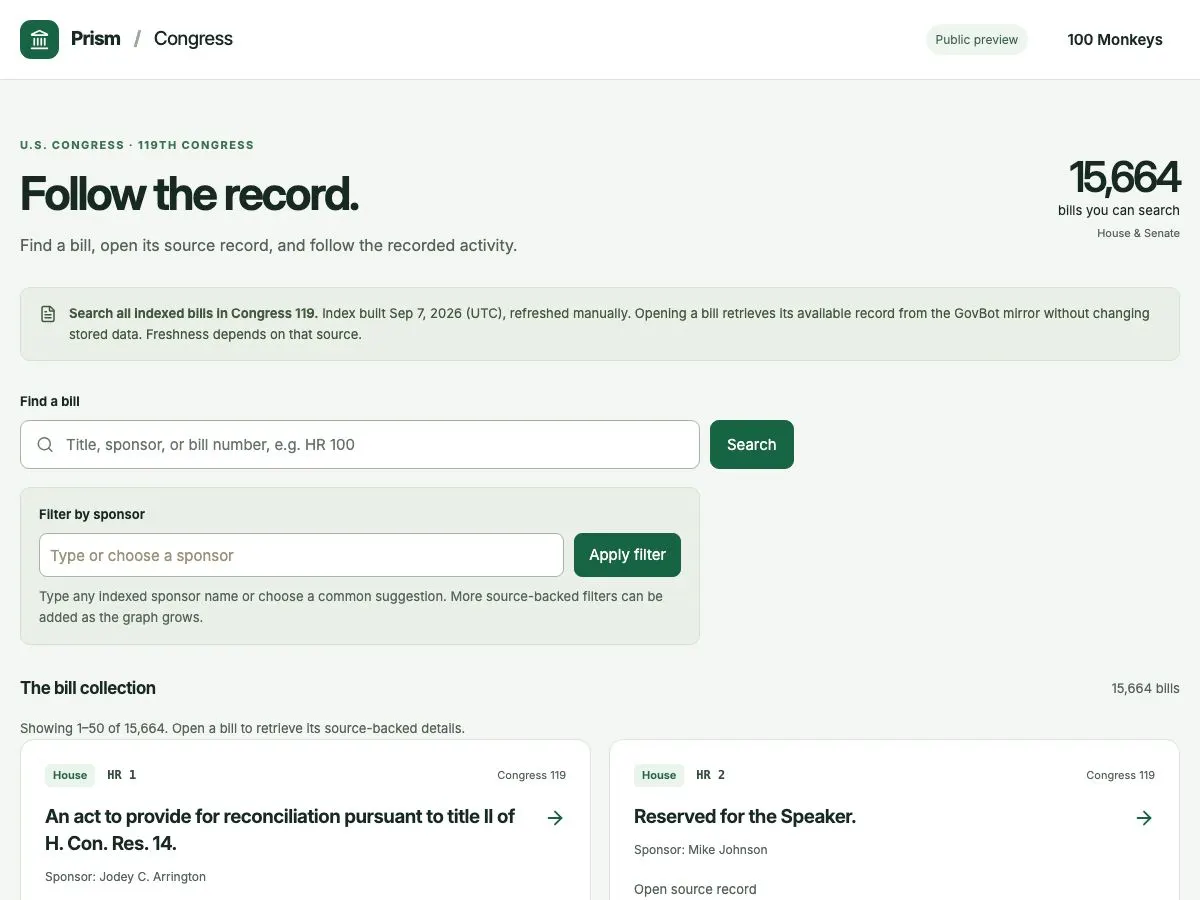 GovBotSearch House and Senate bills of the 119th Congress, see sponsors, and open the source record behind every result.
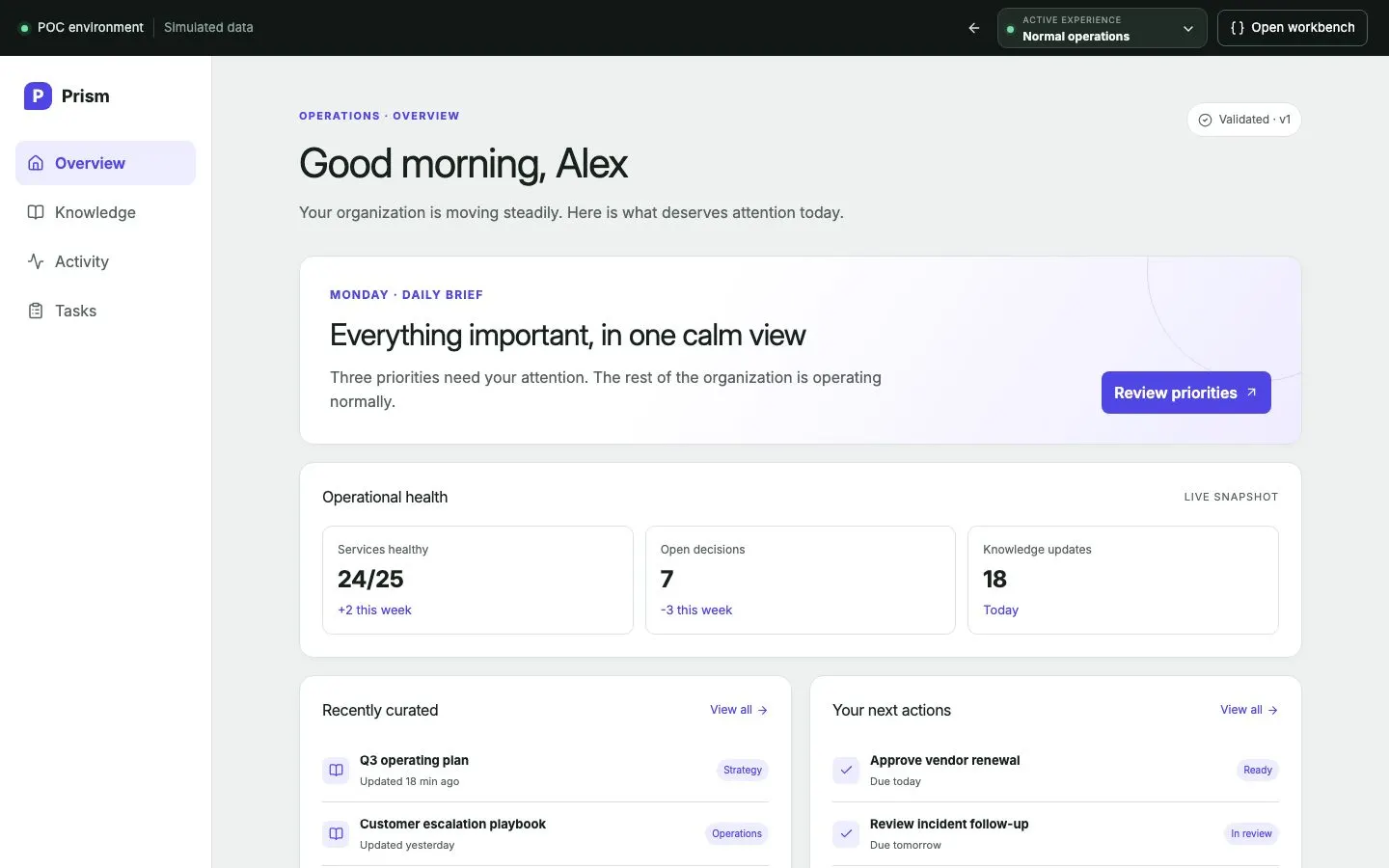 PrismA portal rendered from a declarative experience.v1 document. Edit the JSON, and nothing changes until it validates.
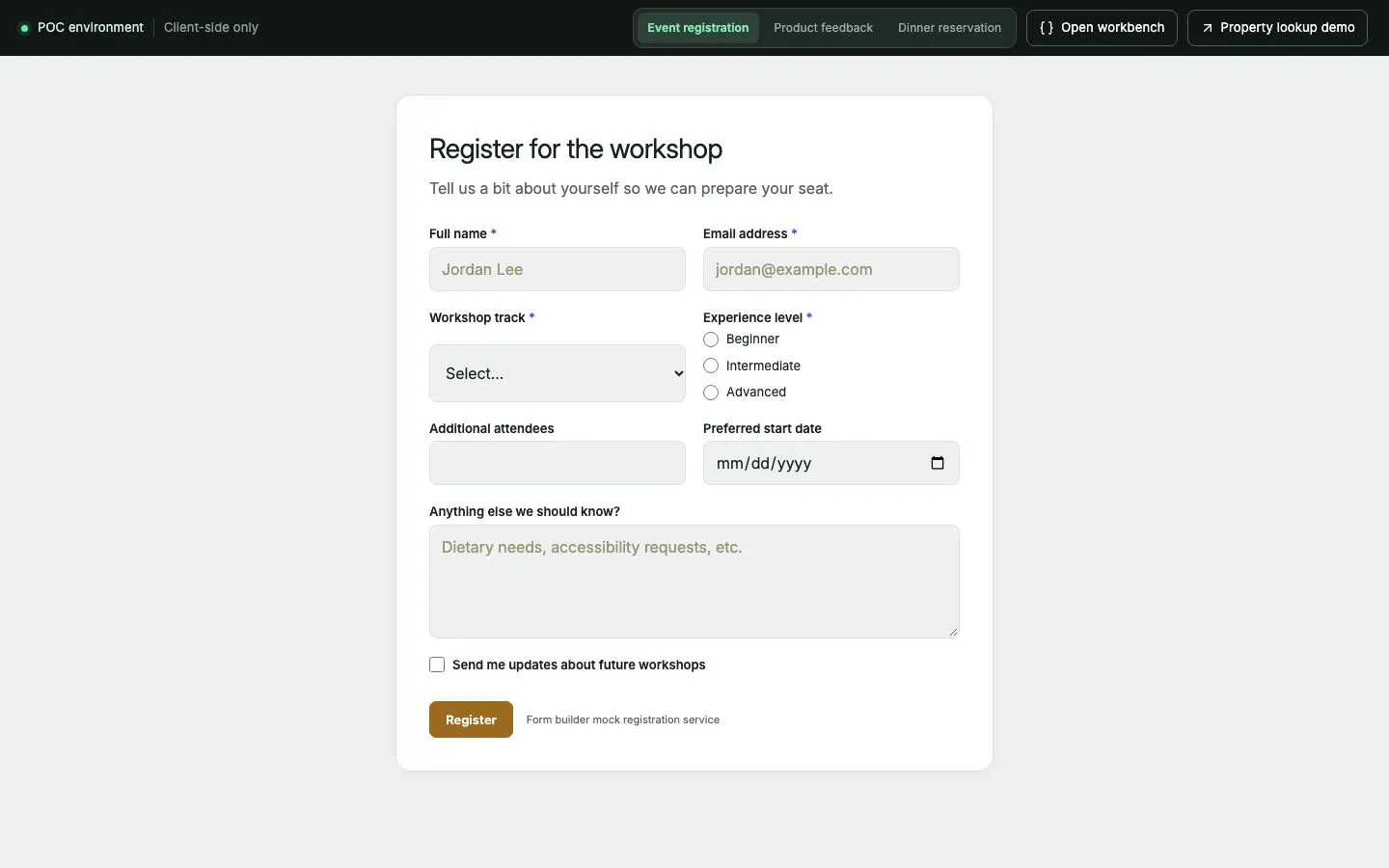 Form BuilderTurn a form.v1 JSON model into a validated, styled form: one to forty fields, typed, with patterns and provenance.
Three numbers we can stand behind.
bills of the 119th Congress indexed in GovBot, each traced to its source record.
validator layers score every candidate: system, format, schema, script and semantic.
replay window on every signed tool call. Outside it, the call is refused.
What it does not do yet.
- Out-of-band, non-MCP network calls are not sealed.
- We do not publish a success rate.
- Compliance: built to satisfy SOC 2 and similar controls. Not certified.